
Choosing between an MBA and a PGDM is one of the most common dilemmas faced by management aspirants. Both programs can lead to successful careers in business, consulting, finance, marketing, analytics, and leadership roles. However, the differences in curriculum structure, industry orientation, recognition, and career outcomes often create confusion.
In 2026, the debate is no longer simply about a degree versus a diploma. Recruiters are increasingly focusing on the quality of the institute, placement records, industry exposure, and practical skills rather than the program title itself. In many cases, a top PGDM can offer better career opportunities than an average MBA, while a top MBA can outperform many PGDM programs.
1. Understanding MBA and PGDM
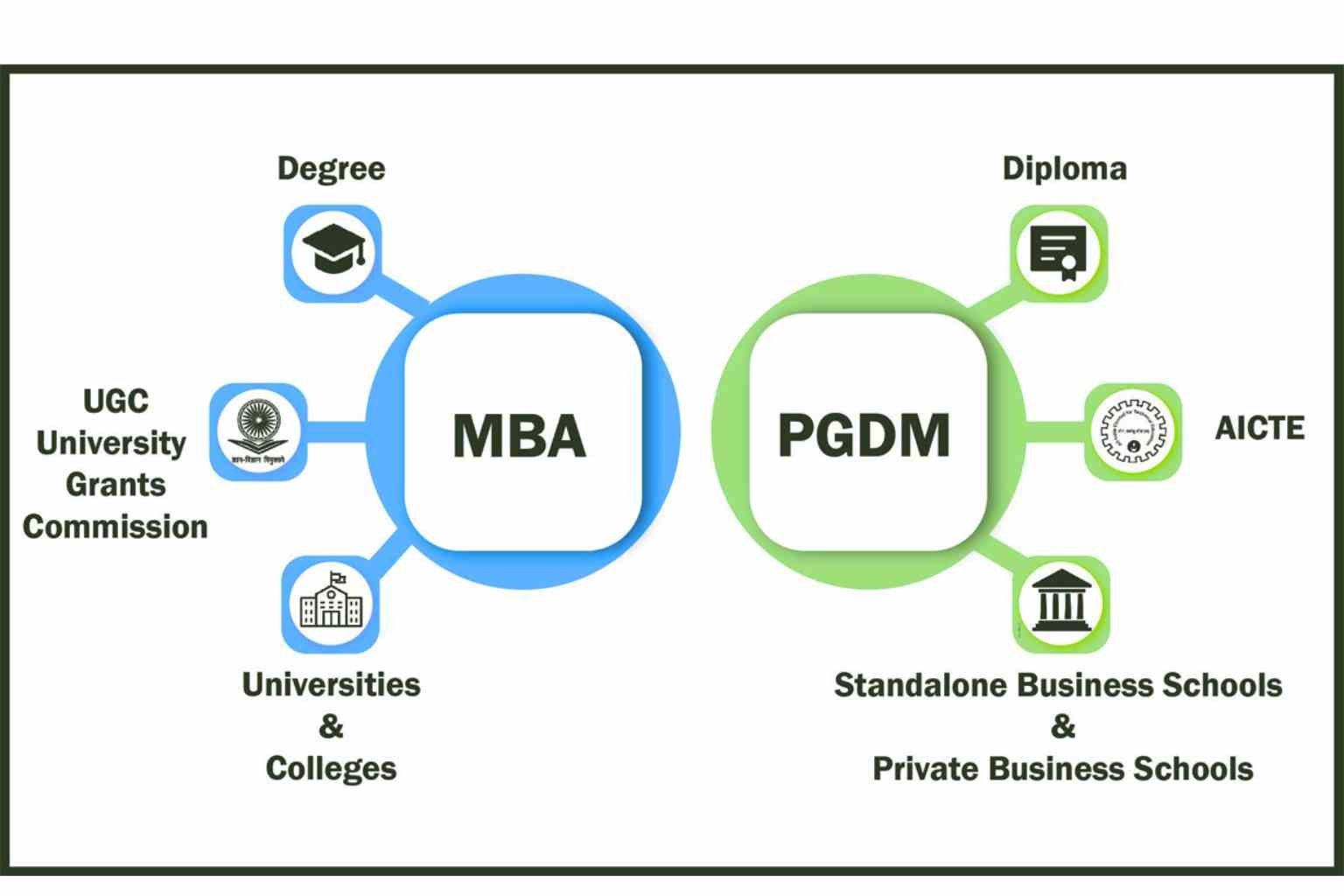
An MBA is a postgraduate management degree awarded by universities and university affiliated institutions recognized under the UGC framework.
A PGDM is a postgraduate diploma awarded by autonomous institutes approved by AICTE. These institutes generally have greater flexibility to update their curriculum according to industry requirements.
2. Key Difference Between MBA and PGDM
The primary difference lies in the academic structure and awarding authority.
Some major distinctions include:
- MBA is a university awarded degree
- PGDM is offered by autonomous institutes
- MBA curriculum is generally more structured
- PGDM curriculum is often more industry focused
Both qualifications are widely accepted in the corporate sector.
3. Which One Offers Better Placements?
Placements depend far more on the institute than the course title. Top PGDM institutes such as XLRI, SPJIMR, MDI, and IMT often deliver placement outcomes that surpass many university MBA programs.
Similarly, top MBA institutions such as FMS, JBIMS, IIFT, and NMIMS also offer exceptional placement opportunities. Recruiters usually evaluate the institute’s reputation, alumni network, and candidate quality rather than simply checking whether the qualification is MBA or PGDM.
4. Salary Comparison in 2026
Salary packages vary significantly depending on the business school, specialization, industry, and candidate profile.
Graduates from leading MBA and PGDM institutions often secure competitive salaries in consulting, finance, product management, and analytics roles. Industry experts consistently emphasize that institute quality has a greater impact on salary than the MBA versus PGDM label.
5. Curriculum and Industry Relevance
One major advantage of PGDM programs is curriculum flexibility. Autonomous institutes can revise their syllabus more frequently to include emerging fields such as AI, business analytics, fintech, and digital transformation.
This often helps students gain skills that align closely with current industry requirements.
6. Factors That Influence Career Growth
Career experts often recommend evaluating these factors before choosing a program:
- Placement records and median salary
- Alumni network strength
- Industry exposure and internships
- Curriculum relevance and specialization options
These factors generally influence career growth more than the MBA or PGDM title itself.
7. Recognition for Government Jobs and Higher Studies
MBA degrees generally enjoy broader recognition for government jobs, public sector roles, and higher education opportunities.
Some PGDM programs may require AIU equivalence for eligibility in certain government positions or doctoral studies. Students planning to pursue a PhD or government career should verify these requirements carefully.
8. ROI and Cost Considerations
The return on investment depends on tuition fees, placement outcomes, and career progression after graduation.
A well ranked PGDM institute with strong placements can provide better ROI than an average MBA program. Likewise, a reputed MBA from a top university can deliver exceptional value.
9. Who Should Choose an MBA?
Students who value academic recognition, government job eligibility, international acceptance, and university based learning may find an MBA more suitable.
MBA programs are often preferred by candidates interested in structured academic frameworks and long term educational pathways.
10. Who Should Choose a PGDM?
Students seeking industry focused learning, updated curriculum, practical exposure, and strong corporate connections may benefit from a PGDM program.
Many leading autonomous institutes regularly revise their curriculum to align with changing business trends and employer expectations.
Key Takeaways
The MBA versus PGDM decision in 2026 should not be based solely on the degree or diploma label. Placements, salary outcomes, career growth, and ROI are influenced much more by the institute’s reputation, alumni network, curriculum quality, and industry exposure. A top PGDM can easily outperform an average MBA, while a reputed MBA can offer exceptional long term career advantages. Students should focus on the business school’s overall quality rather than just the program title.
FAQs:
Q1. Is MBA better than PGDM in 2026?
Not necessarily. The quality of the institute generally matters more than whether the program is called MBA or PGDM.
Q2. Which offers better placements, MBA or PGDM?
Top institutes from both categories offer excellent placements. Placement quality depends primarily on the business school.
Q3. Does PGDM have the same value as MBA in corporate jobs?
In most private sector jobs, recruiters focus on institute reputation, skills, and experience rather than degree versus diploma status.
Q4. Is PGDM better for industry exposure?
Many PGDM institutes offer more flexible and industry oriented curricula because they can update courses more frequently.
Q5. Which is better for government jobs, MBA or PGDM?
MBA generally has broader recognition for government and public sector opportunities, although AIU equivalent PGDM programs may also qualify in many cases.